Middle East and Africa Edible Oil Market
admin July 1, 2024 Business, Food & Beverage, News

Middle East and Africa Edible Oil Market Growth, Revenue, Emerging Trends, Key Players, Challenges, Business Analysis and Future Opportunities 2033: SPER Market Research

Edible oils are oils derived from vegetables, seeds, or fruits that are safe for people to consume. Among other culinary operations, these plant-based oils are frequently employed in baking, frying, cooking, and salad dressing. Sunflower oil, canola oil, olive oil, soybean oil, and palm oil are common types; each has a distinct nutritional composition and flavor profile.

According to SPER market research, Middle East and Africa Edible Oil Market Size- By Type, By Package Type, By Distribution Channel, By End User – Regional Outlook, Competitive Strategies and Segment Forecast to 2033’ state that the Middle East and Africa Edible Oil Market is predicted to reach USD 11.38 billion by 2033 with a CAGR of 7.73%.

Drivers: It is anticipated that rising oilseed output will boost the edible oils market in the Middle East and Africa. In this region, oilseed cultivation is growing, particularly for crops like soybean, sunflower, and canola. This results from government programs that promote self-sufficient food production as well as the region’s growing need for edible oils. With more oilseeds produced, there would be a greater supply of raw materials available to make edible oil, which will help the market grow. Plus, the expansion of oilseed cultivation could mean more jobs and a stronger local economy.

Challenges: In the scenario that they diminish demand and sales, wider price fluctuations for edible oils may be detrimental to the industry. The edible oil industry may see a decline in revenue if customers decide to forego using edible oils entirely or opt for less expensive options. Moreover, because they are unable to accurately predict future prices and demand, enterprises may also find it challenging to plan their pricing and production plans during times of significant price volatility. The cost increases and inefficiencies that could result from this could further hurt profitability.

Request For Free Sample Report @ https://www.sperresearch.com/report-store/mea-edible-oil-market.aspx?sample=1

Despite the negative impact of COVID-19 on a number of industries, the edible oil market had a notable upswing during this time. People became more interested in changing their diets as a result of the government’s enforced lockdowns, which were implemented to stop the virus’s spread. Because health problems are so common, people are using health supplements more often to strengthen their immune systems. Because of the increased focus on health, market expansion is anticipated to continue long after the pandemic ends.

Middle East and Africa Edible Oil Market Key Players:

Additionally, some of the market key players are; Omani Vegetable Oils & Derivatives Co.(L.L.C), Amira Nature Foods Ltd, AJWA Group, Archer Daniels Midland Co., Al Ghurair, Edible Oil Company LLC, and Others.

Middle East and Africa Edible Oil Market Segmentation:

By Type: Based on the Type, Middle East and Africa Edible Oil Market is segmented as; Palm Oil, Soybean Oil, Rapeseed Oil, Sunflower Oil, Peanut Oil, Specialty Blended Oil, Olive Oil, Corn Oil, Flaxseed Oil, Avocado Oil, Others.

By Package Type: Based on the Package Type, Middle East and Africa Edible Oil Market is segmented as; {(Tinplate Containers, HDPE (High Density Polyethylene) Containers, PVC (Poly Vinyl Chloride) Bottles, PET (Polyethylene Terephthalate) Bottles, Glass Bottles, Semi – Rigid Containers)

By Printing Technology: Based on the Printing Technology, Middle East and Africa Edible Oil Market is segmented as; Flexography, Rotogravure, Digital, Others.

By Distribution Channel: Based on the Distribution Channel, Middle East and Africa Edible Oil Market is segmented as; Direct, Indirect.

By End User: Based on the End User, Middle East and Africa Edible Oil Market is segmented as; Domestics, Industrial, Food Services, Others.

By Region: This research also includes data for Qatar, Saudi Arabia, United Arab Emirates, Egypt, Morocco, Nigeria, South Africa, Rest of Middle-East and Africa.

This study also encompasses various drivers and restraining factors of this market for the forecast period. Various growth opportunities are also discussed in the report.

For More Information, refer to below link:-

Middle East and Africa Edible Oil Market Outlook

Related Reports:     

Middle East and Africa Processed Egg Market Size- By Product, By Application, By Source- Regional Outlook, Competitive Strategies and Segment Forecast to 2033

Middle East and Africa Mushroom Market Size- By Species, By Product Type, By Category, By Nature, By Cultivation Method, By Application- Regional Outlook, Competitive Strategies and Segment Forecast to 2033

 Follow Us –

LinkedIn | Instagram | Facebook | Twitter

Contact Us:

Sara Lopes, Business Consultant – U.S.A.

SPER Market Research

[email protected]

+1-347-460-2899

Latin America Adhesives and Sealants Market
admin July 1, 2024 Business, Chemical, News

Latin America Adhesives Market Growth and Size, Latest Trends, Revenue, Scope, Challenges and Future Opportunities and Forecast Till 2033: SPER Market Research

Materials that are used to unite two surfaces or prevent liquids from leaking through them include adhesives and sealants. Generally, sealants are used to plug gaps and prevent liquids from passing through, while adhesives are used to fuse two surfaces together. Among the many industries that rely significantly on them are electronics, automotive, aerospace, and construction. Among each product type’s unique attributes are adhesive strength, drying time, and resistance to moisture and temperature.

According to SPER market research, Latin America Adhesives and Sealants Market Size- By Adhesive Type, By Sealant Type, By Technology, By Application – Regional Outlook, Competitive Strategies and Segment Forecast to 2033’ state that the Latin America Adhesives and Sealants Market is predicted to reach USD 11.46 billion by 2033 with a CAGR of 5.96%.

Drivers: The Latin American market is experiencing enormous expansion, mostly due to the construction and automobile industries. Customers’ increased purchasing power as a result of the positive trends in the region’s economic recovery has contributed to the expansion of the Latin American market.

Moreover, developments in polyurethane sealants are driving growth in the adhesives and sealants market in Latin America. Manufacturers are increasing their revenue streams by utilizing polyurethane sealants in commercial production, transportation, and construction. They are putting more money into research to develop complex formulations that are necessary to improve the rheology of polyurethane sealants, and they are putting more effort into lowering the isocyanate content to facilitate simpler application.

Request For Free Sample Report @ https://www.sperresearch.com/report-store/latin-america-adhesives-and-sealants-market.aspx?sample=1

Challenges: A multitude of significant challenges face the Latin American adhesives and sealants business. One of the primary challenges is the unpredictable economic climate in the area, which affects consumer spending power and investment choices. This volatility causes demand for adhesives and sealants to vary across various industries, which makes long-term planning and forecasting challenging for businesses in the sector. Because Latin American countries have different standards and complex rules, multinational firms looking to establish a presence may also encounter operational difficulties and admission restrictions.

Impact of COVID-19 on Latin America Adhesives and Sealants Market

The COVID-19 epidemic had a major impact on Latin America’s glue and sealant sector. There was a slowdown in demand for adhesives and sealants across a wide range of industries, including automotive, construction, packaging, and others, as a result of the numerous lockdowns and restrictions in the area that affected industrial activities and construction projects. Further impeding market expansion was supply chain instability combined with decreased consumer investment and expenditure during the pandemic. Production timetables and distribution routes were impacted because local businesses had to adopt strict health regulations and adjust to working remotely.

Additionally, some of the market key players are; 3M, Ashland, Avery Dennison Corporation, BASF SE, Beardow Adams, Bostik, Dow, Eastman Chemical Company.

Our in-depth analysis of the Latin America Adhesives and Sealants Market includes the following segments:

By Adhesive Type:

  • Acrylic
  • PVA
  • Polyurethanes
  • Styrenic Block Copolymers
  • Epoxy
  • EVA
  • Others

By Sealant Type:

  • Acrylic
  • Silicone
  • Polyurethane
  • Butyl
  • Others

By Technology:

  • Water-Based
  • Solvent-Based
  • Hot Melt
  • Reactive
  • Others

By Application:

  • Paperboard and Packaging
  • Building and Construction
  • Transportation
  • Leather and Footwear
  • Furniture
  • Others

 Related Markets:

Contact Us:

Sara Lopes, Business Consultant – U.S.A.,   [email protected] +1-347-460-2899

Stay Connected:  LinkedIn |  Instagram |  Facebook |  Twitter

Germany Home Healthcare Market
admin July 1, 2024 Business, Healthcare, News

Germany Home Healthcare Market Trends and Share, Growth Drivers, Revenue, CAGR Status, Top Key Players, Challenges, Future Opportunities and Forecast 2033: SPER Market Research

Delivering healthcare at-home has proven to be effective when done with the help of the home health care model that integrates technology. One major factor contributing to home healthcare’s quick rise in popularity in Germany is the way it customizes care delivery for therapeutic, diagnostic, and monitoring objectives.

 A lot of medical care can be obtained at home for a wide range of conditions. Rehabilitating injuries and enhancing the patient’s general health are the primary goals of at-home healthcare. For patients with severe illnesses, the elderly, nutrition therapy, and chronic ailments, these services are more appropriate, less costly, and significantly beneficial.

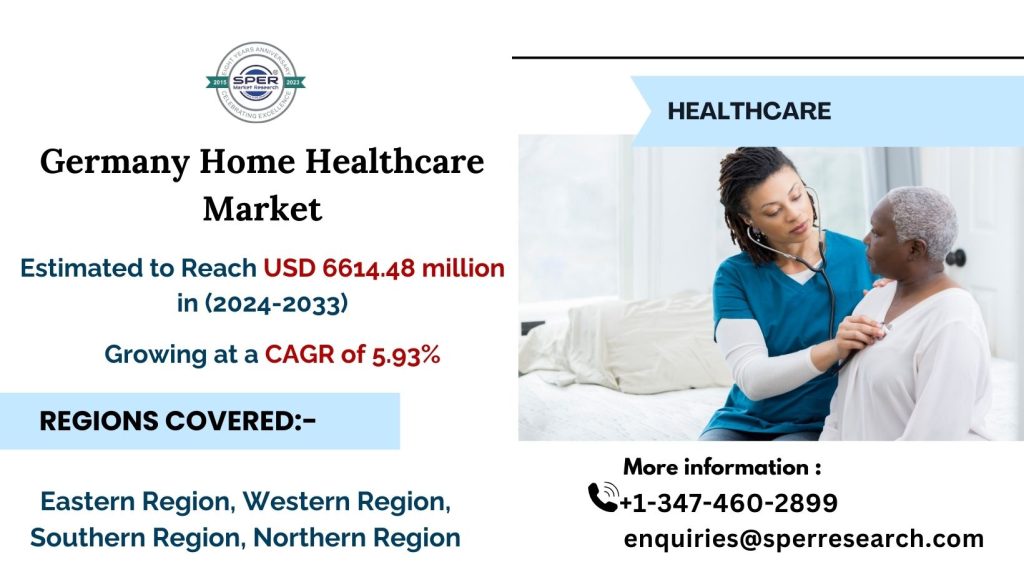
According to SPER market research, Germany Home Healthcare Market Size- By Type, By Products – Regional Outlook, Competitive Strategies and Segment Forecast to 2033’ state that the Germany Home Healthcare Market is predicted to reach USD 6614.48 million by 2033 with a CAGR of 5.93%.

Drivers: Government reimbursements in numerous forms are driving the home care business in Germany. Inpatient care is increasingly being replaced by outpatient care. In Europe, financial programs mandated by the government cover more than 75% of the expenses of outpatient care. For primary care and outpatient specialist services, most European countries provide free services at the time of patient care. Consequently, these reimbursement programs are supporting the market’s growth.

Challenges: The aging population is the main factor driving up demand for home-based care services. Healthcare providers are under pressure to provide individualized, efficient care while controlling costs and guaranteeing accessibility as a result of this demographic transition. The regulatory framework, which may be onerous and complicated and requires providers to adhere to particular rules and procedures, is another significant challenge.

Request For Free Sample Report @ https://www.sperresearch.com/report-store/germany-home-healthcare-market.aspx?sample=1

The COVID-19 epidemic presented both opportunities and challenges for Germany’s home healthcare industry. It had a considerable influence. Home-based treatment gained popularity as a way to lower hospital admission rates and the risk of infection as healthcare institutions concentrated on managing COVID-19 cases. This change sped up the German home healthcare industry’s use of remote monitoring and telehealth equipment. However, the pandemic’s detrimental effects on home healthcare services were exacerbated by staffing shortages, logistical difficulties, and supply chain interruptions.

Additionally, some of the market key players are; Acelity L.P, Fresenius Medical Care, Medline Industries Inc., Hollister Inc., B. Barun melsungen AG.

Germany Home Healthcare Market Segmentation:

By Type: Based on the Type, Germany Home Healthcare Market is segmented as; Devices, Diagnostic, Mobility Assist, Services, Skilled Nursing, Software, Therapeutics, Unskilled Nursing.

By Product: Based on the Product, Germany Home Healthcare Market is segmented as; Therapeutic Products, Testing, Screening and Monitoring Products, Mobility Care Products.

By Region: This research also includes data for Eastern Region, Western Region, Southern Region, Northern Region.

This study also encompasses various drivers and restraining factors of this market for the forecast period. Various growth opportunities are also discussed in the report.

For More Information, refer to below link:- 

Germany Home Healthcare Market Size

Related Reports:

Fibrocystic Breasts Diagnostics Treatment Market Size- By Type, By End User- Regional Outlook, Competitive Strategies and Segment Forecast to 2033

Early Toxicity Testing Market Size- By Technique, By End User- Regional Outlook, Competitive Strategies and Segment Forecast to 2033

Follow Us –           

LinkedIn | Instagram | Facebook | Twitter 

Contact Us:

Sara Lopes, Business Consultant – U.S.A.

SPER Market Research

[email protected]

+1-347-460-2899

India EV Charging Equipment Market
admin June 28, 2024 Automotive, Business, News

India EV Charging Equipment Market Growth 2024, Rising Trends, Share, Size, Growth Strategy, Research by Business Analysis, Challenges, Opportunities and Future Outlook 2032: SPER Market Research

The process of recharging an electric car’s battery is known as electric vehicle (EV) charging. The EV is charged by connecting it to a charger or charging station. A charging station, sometimes referred to as an electric vehicle supply equipment (EVSE) or an EV charging station, is a component of an infrastructure that provides electricity for the recharging of electric vehicles, such as plug-in hybrids, electric cars, and neighbourhood vehicles. EV chargers come in various varieties, such as DC fast chargers, level 1 chargers, and level 2 chargers. An EV charging station, electric recharging point, charging point, or EVSE (Electric Vehicle Supply Equipment) is a facility for charging electric vehicles.

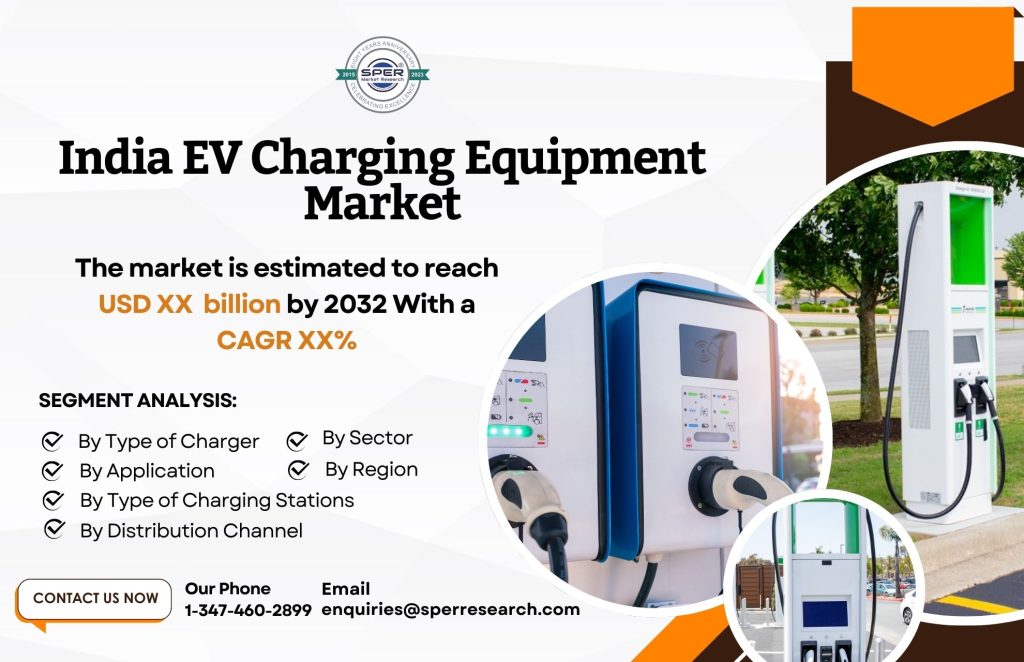
According to SPER Market Research, ‘India EV Charging Equipment Market Size- By Type of Charger, By Type of Charging Stations, By Application, By Distribution Channel, By Sector – Regional Outlook, Competitive Strategies and Segment Forecast to 2032 states that the India EV Charging Equipment Market is estimated to reach USD XX billion by 2032 with a CAGR of XX%.

The notable increase in the popularity of electric vehicles is the main driver of the EVCE industry. Following the launch of the FAME India plan, the Indian market for EV charging equipment experienced a notable upswing. Automakers are being forced to create more electric vehicles by stricter emissions laws and sustainability standards. Governments are encouraging the construction of charging infrastructure in order to reach these targets, as this is essential to securing widespread acceptance of electric vehicles. The main factor driving the market’s growth is the number of charging stations with chargers, which the Department of Heavy Industry (DHI) also intended to encourage.

One of the main obstacles facing the Indian EV charging equipment market is the high initial cost of the equipment and installation, coupled with a lack of space, infrastructure, and labor for setup. In fact, the high price of EVCEs can be a barrier to the market’s expansion and growth. The growth of the charging network may be impeded by the high launch expenditures and continuing operating expenses that charging infrastructure providers may encounter in their quest for profitability. Finding a location to charge an EV might be challenging for owners of these vehicles because the market for electric vehicle charging equipment is still relatively small in some places.

Request For Free Sample Report @ https://www.sperresearch.com/report-store/india-ev-charging-equipment-market.aspx?sample=1

Impact of COVID-19 on the India EV Charging Equipment Market

Lockdowns and restrictions disrupted supply chains for EV charging equipment, leading to shortages and delays in installations. Reduced demand for EVs meant less need for charging infrastructure in the short term. Pandemic has impacted the market positively also. The pandemic heightened awareness of environmental issues, potentially leading to a long-term increase in EV adoption and subsequently, charging equipment. The Indian government continued to roll out policies and incentives to promote EVs and charging infrastructure, providing a boost to the market after the pandemic.

India EV Charging Equipment Market Key Players:

Delhi, Mumbai, Bangalore, Hyderabad, and other cities are anticipated to dominate the market for EV charging equipment.Some of the Key Players are ABB India, AEIDTH Technologies, Amplify Mobility, ChargeMOD, ChargeMyGaadi, Delta Electronics, EVQpoint, LUBI EV Solutions, Magenta Power, Mass-Tech, Okaya Power Group, P2 Power Solutions, PlugNGo, RRT Electro Power (P), Uznaka Solutions Pvt. Ltd., Volttic.

India EV Charging Equipment Market Segmentation:

The SPER Market Research report seeks to give market dynamics, demand, and supply forecast for the years up to 2032. This report contains statistics on product type segment growth estimates and forecasts

By Type of Charger: Based on the Type of Charger, India EV Charging Equipment Market is segmented as; Fast (DC Chargers), Slow (AC Chargers).

By Type of Charging Stations: Based on the Type of Charging Stations, India EV Charging Equipment Market is segmented as; Portable Chargers, Private Charging, Public Charging.

By Application: Based on the Application, India EV Charging Equipment Market is segmented as; 4W, 3W, 2W.

By Distribution Channel: Based on the Distribution Channel, India EV Charging Equipment Market is segmented as; Direct Sales, Indirect Sales.

By Sector: Based on the Sector, India EV Charging Equipment Market is segmented as; Organized, Unorganized.

By Region: The electric vehicle (EV) charging equipment market in India is segmented based on region, including North India, South India, East India, West India, and Central India. Each region has its own unique characteristics and growth drivers, leading to different market dynamics and opportunities.

This study also encompasses various drivers and restraining factors of this market for the forecast period. Various growth opportunities are also discussed in the report.

For More Information, refer to below link:-

India EV Charging Equipment Market Future Outlook

Related Reports:      

United States Warehouse Robotics Market Size- By Type, By Function, By End User- Regional Outlook, Competitive Strategies and Segment Forecast to 2033

Latin America Cold Chain Logistics Market Size- By Service, By Temperature, By End User- Regional Outlook, Competitive Strategies and Segment Forecast to 2033

Follow Us –

LinkedIn | Instagram | Facebook | Twitter

Contact Us:

Sara Lopes, Business Consultant – U.S.A.

SPER Market Research

[email protected]

+1-347-460-2899

India Diagnostic Laboratories Market
admin June 28, 2024 Business, Healthcare, News

India Diagnostic Laboratories Market Share 2024- Industry Trends, Revenue, Growth Drivers, Business Challenges, Opportunities and Future Competition till 2032: SPER Market Research

Diagnostic labs are specialist establishments that execute an extensive range of medical tests and assessments to facilitate the identification, tracking, and management of diverse health issues. By giving vital information that helps medical practitioners make educated decisions about patient care, these laboratories play a crucial part in the healthcare ecosystem. When analyzing biological samples including blood, urine, tissues, and other body fluids, diagnostic labs use cutting-edge technology and apparatus. Disease identification and management are aided by diagnostic labs. These labs examine samples to determine whether infections are present, evaluate organ function, and find cellular or molecular abnormalities.

According to SPER Market Research, India Diagnostic Laboratories Market Size-By Provider Type, By Test Type, By Sector, By End User – Regional Outlook, Competitive Strategies and Segment Forecast to 2032’ states that the India Diagnostic Laboratories Market is estimated to reach USD 44.92 billion by 2032 with a CAGR of 11.75%.

Molecular diagnostic methods such as Next-Generation Sequencing (NGS) and Polymerase Chain Reaction (PCR) have transformed the identification of viral and genetic disorders. Point-of-Care Testing (POCT) tools are useful for prompt diagnosis, especially in remote and emergency situations. Examples of these tools include handheld analyzers and rapid diagnostic assays. AI can help interpret medical imaging, including CT, MRI, and X-ray scans. People who are aware of healthcare issues are more likely to seek out screenings and diagnostic tests on their own, which helps to identify illnesses early on. Treatment outcomes are frequently better when they are detected early. Chronic and age-related health issues are frequently linked to an increased risk of aging. More often, diagnostic testing is required to track and treat these diseases.

Laboratory operators may find it difficult to navigate and comply with federal and state laws. Resources such as infrastructure, financing, and access to skilled staff may be scarce for many diagnostic labs, particularly in smaller towns and rural areas. The imposition of strong quality control procedures may be impeded by these constraints. Hackers frequently target the healthcare industry, which includes diagnostic labs. Sensitive patient data, such as medical records, test results, and personal information, may become public knowledge due to data breaches. Because there is no set methodology for data security and privacy, there could be differences in data protection procedures throughout diagnostic labs, which could lead to irregularities in patient information security.

Request For Free Sample Report @ https://www.sperresearch.com/report-store/india-diagnostic-laboratories-market.aspx?sample=1

COVID-19 Impact on India Diagnostic Laboratories Market

 At first, testing within India was restricted to government laboratories. But because of the overwhelming demand, the government also authorized commercial labs to do COVID-19 testing as well. As the epidemic spread, regional governments raised public knowledge of coronavirus illness and its diagnosis, treatment, and transmission. Private labs began concentrating more on home collection services. Some laboratories launched Anywhere Anytime Services (home collection services) to provide free 24-hour lab tests at the doorstep, including ECG services. A significant increase in demand for testing was also caused by mobile testing vans and drive-through locations/centers for standard pathology and COVID tests.

India Diagnostic Laboratories Market Key Players:

North India has the largest share and is predicted to continue to occupy this position of strength. Some of the Key Players are 360 Diagnostic & Health Services Pvt. Ltd., Apollo Hospitals Enterprise Ltd., Dr Lalchandani Labs Ltd., Dr. Lal PathLabs Limited, Lifecare Diagnostic & Research Centre Pvt Ltd., Max Healthcare Institute Limited, Medall Healthcare Pvt. Ltd., Medinova Diagnostic Services Ltd., Metropolis Healthcare Ltd.

India Diagnostic Laboratories Market Segmentation:

The SPER Market Research report seeks to give market dynamics, demand, and supply forecast for the years up to 2032. This report contains statistics on product type segment growth estimates and forecasts

By Provider Type: Based on the Provider Type, India Diagnostic Laboratories Market is segmented as; Diagnostic Chains, Hospital Based Diagnostic Labs, Stand Alone Diagnostic Labs

By Test Type: Based on the Test Type, India Diagnostic Laboratories Market is segmented as; Pathology, Radiology.

By Sector: Based on the Sector, India Diagnostic Laboratories Market is segmented as; Rural, Urban

By End User: Based on the End User, India Diagnostic Laboratories Market is segmented as; Corporate Clients, Doctor Referrals, Routine, Specialized, Wellness

By Region: The India Diagnostic Laboratories Market is studied for Andhra Pradesh, Assam, Gujrat, Karnataka, Maharashtra, NCR, Tamil- Nadu, West Bengal, Rest of India.

This study also encompasses various drivers and restraining factors of this market for the forecast period. Various growth opportunities are also discussed in the report.

For More Information, refer to below link:-

India Diagnostic Laboratories Market Share

Related Reports:      

Germany Home Healthcare Market Size- By Type, By Products- Regional Outlook, Competitive Strategies and Segment Forecast to 2033

Japan Veterinary Healthcare Market Size- By Product, By Animal Type- Regional Outlook, Competitive Strategies and Segment Forecast to 2033

Follow Us –

LinkedIn | Instagram | Facebook | Twitter

Contact Us:

Sara Lopes, Business Consultant – U.S.A.

SPER Market Research

[email protected]

+1-347-460-2899

Small-Cell-5G-Network-Market
admin June 28, 2024 Business, IT Industry, News

Small Cell 5G Network Market Size, Trends, Industry Share, Revenue, Growth Drivers, Business Challenges, Opportunities and Forecast Analysis till 2033: SPER Market Research

Low-control base stations known as “small cells” are employed to increase network coverage and capacity while providing end users with distant availability. Most of the time, the small cells are sent over both indoor and outdoor environments to give clients rapid information service. In 5G networks, the tiny cell network would play a crucial role. Currently, 5G telecom operators are gradually focusing on offering tiny cells in low-recurrence bands to provide clients with better data transfer services.

According to SPER Market Research, Small Cell 5G Network Market Size- By Component, By Cell Type, By Radio Technology, By Deployment Mode, By Application- Regional Outlook, Competitive Strategies and Segment Forecast to 2033’ states that the Global Small Cell 5G Network Market is estimated to reach USD 50.88054 million by 2033 with a CAGR of 37.35%.

The market for small cell 5G networks is seeing rapid expansion due to the fast growing number of Internet of Things (loT) devices and the possibility of a tiny cell network to facilitate direct connectivity between those devices. The growing usage of mobile networks, with combined data usage for social networking, gaming, video, and live streaming, is another significant factor driving this industry. The world is currently heading towards 5G, which will accelerate data transformation to real-time speeds. As a result, there will be a greater need for tiny cell networks. A further encouraging sign for the small cell 5G network is the rise in demand for linked products, such as wearable smart devices.

Request For Free Sample Report @ https://www.sperresearch.com/report-store/small-cell-5g-network-market.aspx?sample=1

Mobile network operators encountered major backhaul obstacles in the 5G small cell market prior to the network’s debut, including the requirement for connectivity with ultralow latency of less than 1 millisecond (ms) (roundtrip). Small cells are deployed when there is severe network congestion, insufficient coverage from macrocells, and no power or backhaul. Radio backhaul is one possible answer to this issue, but the deployment of small cells requires unit size reduction and throughput testing, which could raise the deployment cost. One major challenge to the efficient deployment and functioning of tiny cells is the absence of an alternate backhaul solution.

Impact of COVID-19 on Global Small Cell 5G Network Market

The COVID-19 pandemic has accelerated the digitization of every sector vertical. To ensure improved connection, a fifth-generation network that is more dependable, quicker, and more capacious will be needed. Furthermore, since seamless connectivity is essential to many smart city features, demand for Internet of Things apps will continue to be high. However, in other nations, the pandemic is offering a multitude of chances for a quicker rollout of 5G infrastructures. Particularly, the government-imposed lockdown and travel restrictions have facilitated the installation of physical infrastructure, such as fibre and antennae.

Global Small Cell 5G Network Market Key Players:

For the duration of the projected period, North America is expected to have the greatest market size. When it comes to embracing cutting-edge technologies, North America is a clear leader. It is anticipated that operators in North America will implement tiny cell technologies on their 5G mobile networks. The market’s major participants include Fujitsu Limited, Nokia Corporation, Pctel, Qucell Inc, Radisys Corporation, and others.

Our in-depth analysis of the Small Cell 5G Network Market includes the following segments:

By Component:

  • Solution
  • Services

By Cell Type:

  • Femtocell
  • Metrocell
  • Picocell
  • Microcell

By Radio Technology:

  • Standalone
  • Non-Standalone

By Deployment Mode:

  • Indoor
  • Outdoor

By Application:

  • Residential
  • SOHO
  • Enterprises
  • Others

For More Information, refer to below link: –

Small Cell 5G Network Market Outlook

Related Reports:

North America Digital Forensics Market Size- By Component, By Type, By End User- Regional Outlook, Competitive Strategies and Segment Forecast to 2033

Mindfulness Meditation Apps Market Size- By Operating System, By Service Type, By Deployment Model- Regional Outlook, Competitive Strategies and Segment Forecast to 2033

Follow Us –

LinkedIn | Instagram | Facebook | Twitter

Contact Us:

Sara Lopes, Business Consultant – U.S.A.

SPER Market Research

[email protected]

+1-347-460-2899

Kenya Automotive Lubricants Market
admin June 28, 2024 Automotive, Business, News

Kenya Automotive Lubricants Market Trends 2024, Share, Growth Drivers, Revenue, Top Key Players, Challenges, Future Opportunities and Forecast 2033: SPER Market Research

Automotive lubricants are essential for keeping a vehicle running smoothly and safely. They are made from a variety of base oils. Mineral-based lubricants are widely used over the world due to their accessibility of availability. However, the use and popularity of synthetic or bio-based lubricants has skyrocketed, transforming the industry. Consumers have benefited from technology advancements in a variety of ways, including increased oil drain and service intervals, higher fuel efficiency, and extended warranty periods.

According to SPER Market Research, Kenya Automotive Lubricants Market Size- By Product Type, By Vehicle Type, By Composition, By Sales Channel – Regional Outlook, Competitive Strategies and Segment Forecast to 2033’ states that the Kenya Automotive Lubricants Market is estimated to reach USD 133.94 million by 2033 with a CAGR of 5.26%.

Drivers: Growing consumer demand for synthetic and bio-based lubricants—which are high-performing and environmentally friendly—is propelling the automotive lubricants market. In order to create bespoke lubrication solutions, lubricant producers and equipment manufacturers can also work together. In speciality industries like food processing and pharmaceuticals, there is also a growing need for specific lubricants. Additionally, investigation of export potential in bordering countries and growth into uncharted regions of Kenya. The emphasis on preventive maintenance to improve equipment efficiency and longevity drives up the need for lubricants.

Restraints: Automotive lubricants enhance the life of a vehicle by reducing friction and safeguarding its solid moving parts. However, when lubricants and technologies improve, the growth rate reduces dramatically. The expanding usage of synthetic lubricants, which provides benefits such as enhanced fuel efficiency, has lengthened oil drain intervals in automobiles from 6-12 months to 18-24 months. Furthermore, purchasers choose high-quality lubricants with longer oil drain intervals to protect their automobiles. However, this has hampered the market’s volume expansion, and volume growth is expected to remain moderate during the forecast period. Furthermore, rising sales of electric vehicles are expected to stymie industry growth in the coming years because they do not require engine oil.

Request For Free Sample Report @ https://www.sperresearch.com/report-store/kenya-automotive-lubricants-market.aspx?sample=1

Impact of COVID-19 on Kenya Automotive Lubricants Market

The COVID-19 outbreak has a wide-ranging impact on Kenya’s lubricant industry. Demand decreased during the shutdown due to reduced economic activity and travel restrictions. But as commercial operations resumed, the market rebounded. The pandemic also raised attention to the importance of trustworthy lubricants and preventive maintenance in order to ensure continued functioning.

Kenya Automotive Lubricants Market Key Players:

The demand and consumption patterns in the Kenyan lubricants market vary by area. Nairobi holds the biggest market share because it is the capital and a significant industrial hub. Galana Energies Limited, Hass Petroleum, Kenol & Kobil, National Oil Corporation of Kenya, Energising Kenya, OLA Energy, and Others are some of the major companies in the market.

Kenya Automotive Lubricants Market Segmentation:

By Product Type: Based on the Product Type, Kenya Automotive Lubricants Market is segmented as; Engine Oil, Transmission & Hydraulic Fluids, Gear Oil, Grease, Chain Oil, Brake Fluids, Others.

By Vehicle Type: Based on the Vehicle Type, Kenya Automotive Lubricants Market is segmented as; ICE Vehicles EV.

By Composition: Based on the Composition, Kenya Automotive Lubricants Market is segmented as; Mineral Oil Lubricants, Fully Synthetic Oil Lubricants, Semi-synthetic Lubricants.

By Sales Channel: Based on the Sales Channel, Kenya Automotive Lubricants Market is segmented as; Original Equipment Manufacturers (OEMs), Aftermarket.

By Region: This research also includes data for Eastern, Northern, Southern, Western.

This study also encompasses various drivers and restraining factors of this market for the forecast period. Various growth opportunities are also discussed in the report.

And More…

Kenya Automotive Lubricants Market Demand

Related Reports:      

Asia Pacific Courier, Express and Parcel Market Size- By Service Type, By Destination, By Type, By End User- Regional Outlook, Competitive Strategies and Segment Forecast to 2033

Heavy Duty Tire Market Size- By Type, By Product, By Application, By End User- Regional Outlook, Competitive Strategies and Segment Forecast to 2033

Follow Us –

LinkedIn | Instagram | Facebook | Twitter

Contact Us:

Sara Lopes, Business Consultant – U.S.A.

SPER Market Research

[email protected]

+1-347-460-2899

Japan Data Center Colocation Market - Copy
admin June 28, 2024 IT Industry, News

Japan Data Center Colocation Market Growth and Size, Rising Trends, Revenue, CAGR Status, Challenges and Future Opportunities and Forecast Analysis Till 2033: SPER Market Research

A colocation data centre, frequently alluded to as a ‘Color,’ is any enormous datacentre office that rents out rack space to outsiders for their servers or other organization gear. This is an exceptionally well-known help that is utilized by organizations that might not have the assets expected to keep up with their own data centre. In the realm of IT and data centres, colocation refers to a facility where multiple organizations can rent space to host their servers and other computing hardware. These facilities typically provide the necessary infrastructure power, cooling, and physical security. Customers benefit from colocation by outsourcing the management of their hardware while retaining control over their software and data.

According to SPER Market Research, Japan Data Center Colocation Market Size- By Type, By End User Industry, By Organization Size- Regional Outlook, Competitive Strategies and Segment Forecast to 2033’ states that the Japan Data Center Colocation Market is estimated to reach USD XX Billion by 2033 with a CAGR of 15.1%.

There is a growing need for secure, reliable, and scalable data storage and processing solutions. Colocation data centres offer businesses the ability to scale their infrastructure without the upfront costs and operational complexities associated with building and managing their own facilities. The push towards digital transformation across various industries is driving demand for data centre services in Japan. Organizations are adopting cloud computing, IoT, AI, and other digital technologies that require robust and high-performance data centre infrastructure. Japan has stringent data protection laws and regulations that require businesses to store and process data within the country’s borders. Colocation data centres help companies comply with these regulations while providing secure and reliable infrastructure to safeguard sensitive data.

Japan’s major urban centres, such as Tokyo and Osaka, have limited available space and high real estate costs. This makes it expensive to acquire land and build new data centre facilities, impacting the expansion plans of colocation providers. Japan has strict regulations regarding data privacy and security, which can pose challenges for colocation providers in terms of compliance. Meeting these regulations requires significant investment in security measures and adherence to specific data handling protocols. Achieving energy efficiency and sustainability goals is increasingly important for data centres. Colocation providers must balance the need for high-power density operations with reducing their environmental footprint, which can be challenging in a densely populated and regulated market like Japan.

Request For Free Sample Report @ https://www.sperresearch.com/report-store/japan-data-center-colocation-market.aspx?sample=1

Japan’s data centres were first seriously affected by the Coronavirus actuated pandemic. The rising pattern of remote work and web-based learning has prompted a huge expansion in reliance on the web and various applications, which has affected server farm execution. Japan quickly answered by extending its data centres foundation to oblige the developing interest for server farms. During the pandemic, both people in general and confidential areas laid out server farms. Accordingly, the Coronavirus time frame saw extraordinary outcome in the Japanese server farm area. Throughout the projection period, the market is additionally expected to consistently rise.

The largest market shares for Japan data center colocation market is Tokyo due to its status as a financial, commercial, and technological center attracts a significant number of businesses needing robust IT infrastructure. Arteria Networks Corporation, Air Trunk Operating Pty Ltd., Colt Technology Services, Digital Edge (Singapore) Holdings Pte Ltd., Digital Realty Trust are few of the major names in this market.

Japan Data Center Colocation Market Segmentation

By Type: Based on the Type, Japan Data Center Colocation Market is segmented as; Retail Colocation, Wholesale Colocation.

By End User Industry: Based on the End User Industry, Japan Data Center Colocation Market is segmented as; BFSI, Education, Energy, Entertainment and Media, Government, Healthcare, IT and Telecom, Manufacturing, Retail, Others.

By Organization Size: Based on the Organization Size, Japan Data Center Colocation Market is segmented as; Small and Medium Enterprises, Large Enterprises.

By Region: This research also includes data for Central/ Chubu Region, Chugoku Region, Hokkaido Region, Kansai/Kinki Region, Kanto Region, Kyushu-Okinawa Region, Shikoku Region, Tohoku Region.

For More Information, refer to below link:-

Japan Data Center Market Outlook

Related Reports:

South America Data Center Market Size- By Data Center Size, By Tier Type, By Absorption – Regional Outlook, Competitive Strategies and Segment Forecast to 2033

Saudi Arabia Satellite Internet Market Size- By Band Type, By End User- Regional Outlook, Competitive Strategies and Segment Forecast to 2033

Contact Us:  

Sara Lopes, Business Consultant – USA

[email protected]

+1-347-460-2899

Latin America Home Textiles Market
admin June 28, 2024 Business, Consumer Goods, News

Latin America Home Textiles Market Size and Share, Upcoming Trends, Growth Strategy, Key Manufactures, Business Opportunities and Forecast 2024-2033: SPER Market Research

Home textiles have a significant role in increasing the comfort and style of homes. They contain a wide range of products made from various textiles, including cotton, silk, linen, and synthetics. These textiles can be used in bedrooms, living rooms, kitchens, bathrooms, and outdoor areas, serving a variety of utilitarian and aesthetic needs. The Latin American home textiles sector includes both residential and commercial segments, catering to individual consumers, hotels, restaurants, healthcare institutions, and other businesses.

According to SPER Market Research, Latin American Home Textiles Market Size- By Product Type, By Distribution Channel – Regional Outlook, Competitive Strategies and Segment Forecast to 2033’ states that the Latin American Home Textiles Market is estimated to reach USD 16.77 billion by 2033 with a CAGR of 3.23%.

Drivers: The expansion of end-use industries such as hospitality, healthcare, and housing, urban consumers’ growing fashion consciousness in terms of home furnishings, rising demand for digitally printed home textiles, and rapidly emerging fashion trends in home textiles are all expected to contribute to the Latin American home textile market’s expected increased growth rate. Significant drivers of market expansion in Latin America include the region’s high rate of urbanisation, increased disposable income, and higher standard of living. Many industry merchants see the retail home textiles market in Latin America as one of their most profitable opportunities.

Restraints:

  • Intense Competition: The US home textile market is highly competitive, with multiple players vying for market share. Intense competition can lead to price wars, margin pressure, and reduced earnings for market participants. Furthermore, global supply chain disruptions such as raw material shortages, transportation bottlenecks, and geopolitical crises can affect the availability and cost of inputs for domestic textile production, causing production delays and cost increases. Furthermore, economic downturns and recessions can reduce consumer spending on non-essential things like home textiles as people prioritise important purchases, resulting in lower market demand and sales.

Request For Free Sample Report @ https://www.sperresearch.com/report-store/latin-america-home-textiles-market.aspx?sample=1

Impact of COVID-19 on Latin American Home Textiles Market

The COVID-19 epidemic has caused severe disruptions in international trade flows and the global economy, resulting in a sharp drop in textile productivity in Latin America. The outbreak has had a significant impact on the region. The Mexican textile and garment market, one of the largest in the region, has managed the entire supply chain, beginning with cotton and other man-made fibre production. Mexico, a major exporter of textiles and clothing to the United States, has been experiencing industrial disruptions as a result of the lockdown and other safety measures.

Latin American Home Textiles Market Key Players:

Brazil has the biggest market share. Brazil, a BRIC country, has huge growth potential in its textile supply chains, both natural and synthetic fibres. The market’s top companies are Tex Brasil, Textil J. Serrano, Coteminas S.A., Buddemeyer, Jolitex Ternille, Camesa, and others.

Latin American Home Textiles Market Segmentation:

By Product Type: Based on the Product Type, Latin American Home Textiles Market is segmented as; Bed Linen, Bath linen, Kitchen and Table Linen, Upholstery, Floor.

By Distribution Channel: Based on the Distribution Channel, Latin American Home Textiles Market is segmented as; Online, Offline.

By Region: This research also includes data for Brazil, Mexico, Chile, Colombia, Peru.

This study also encompasses various drivers and restraining factors of this market for the forecast period. Various growth opportunities are also discussed in the report.

For More Information, refer to below link: –

Latin American Home Textiles Market Future Scope

Related Reports:

Europe Hair Care Market Size- By Product Type, By Distribution Channel- Regional Outlook, Competitive Strategies and Segment Forecast to 2033

North America Carpet and Rugs Market Size- By Type, By Product, By Raw Material, By Application- Regional Outlook, Competitive Strategies and Segment Forecast to 2033

Follow Us –

LinkedIn | Instagram | Facebook | Twitter

Contact Us:

Sara Lopes, Business Consultant — USA

SPER Market Research

[email protected]

+1–347–460–2899

Perovskite Solar Cell Market
admin June 28, 2024 Business, News, Power & Energy

Perovskite Solar Cell Market Growth 2024, Revenue, Global Industry Share, Rising Trends, Challenges, Business Analysis and Future Opportunities 2032: SPER Market Research

Global Perovskite Solar Cell Market Overview

The global industry involved in developing, producing, and marketing integrated circuits specifically designed for microwave and millimeter-wave frequencies is known as the perovskite solar cell market. Perovskite solar cells are used in various fields, including defense electronics, satellite communication, radar systems, and telecommunications. This market encompasses the manufacture and distribution of perovskite solar cells and R&D activities aimed at advancing the technology to meet specific industrial demands and cater to a wide range of high-frequency applications.

Market Insights and Forecast

According to SPER Market Research, the Global Perovskite Solar Cell Market is projected to reach USD 11.84 billion by 2032, growing at a CAGR of 32.64%. Several factors are driving this expansion:

  • Increasing Solar Installations: The growing number of solar system installations is positively impacting the market.
  • Cost Reduction: Rising demand for perovskite solar cells is driven by the need to lower solar panel costs.
  • Advancements and Urbanization: Improved reserves, urbanization, lifestyle changes, and increased consumer spending are further influencing the market.

Request For Free Sample Report @  https://www.sperresearch.com/report-store/perovskite-solar-cell-market.aspx?sample=1

Advantages of Perovskite Solar Cells

Perovskite solar cells offer several benefits over traditional energy panels:

  • Availability and Affordability: They are more readily available and economical.
  • Ease of Manufacture: Easier to manufacture compared to conventional panels.
  • Power Conversion: Provide remarkable power conversion, resulting in excellent performance.

These attributes are expected to significantly enhance the perovskite solar energy market due to their growing acceptance.

Challenges

Despite their potential, perovskite solar cells face several challenges:

  • Durability: They deteriorate more quickly than conventional silicon cells under light and moisture exposure.
  • Commercial Manufacturing: Scaling up manufacturing to a commercial level while maintaining quality is difficult.
  • Environmental and Health Concerns: The use of lead in some compositions raises environmental and health issues.

For More Information, refer to below link:-

Perovskite Solar Cell Market Outlook

Impact of COVID-19

The COVID-19 pandemic halted many economic and industrial activities, significantly slowing down the production of solar PV panels and reducing electricity demand. This led to a decline in the import and export of raw materials for electricity-generating devices, limiting market expansion.

Regional Outlook

The Asia-Pacific region is expected to lead the global market for perovskite solar cell modules. This dominance is due to:

  • Rising Investments: Increased investments in solar energy research and development.
  • Growing Renewable Energy Demand: Particularly in Southeast Asian and Chinese countries.

Key Market Players

Some of the major players in the perovskite solar cell market include:

  • Oxford Photovoltaics
  • Polyera Corporation
  • Saule Technologies
  • Xiamen Weihua Solar Co. Ltd.
  • Fraunhofer ISE
  • FrontMaterials Co. Ltd.
  • New Energy Technologies Inc.
  • Dyesol
  • FlexLink Systems Inc.

Related Reports:

Europe Solar Panel Recycling Market Size- By Type, By Process- Regional Outlook, Competitive Strategies and Segment Forecast to 2033

Blockchain In Energy Utilities Market Size- By Type, By Component, By End User, By Application- Regional Outlook, Competitive Strategies and Segment Forecast to 2033

Follow Us –  

LinkedIn | Instagram | Facebook | Twitter

Contact Us:  

Sara Lopes, Business Consultant – USA

SPER Market Research

[email protected]

+1-347-460-2899