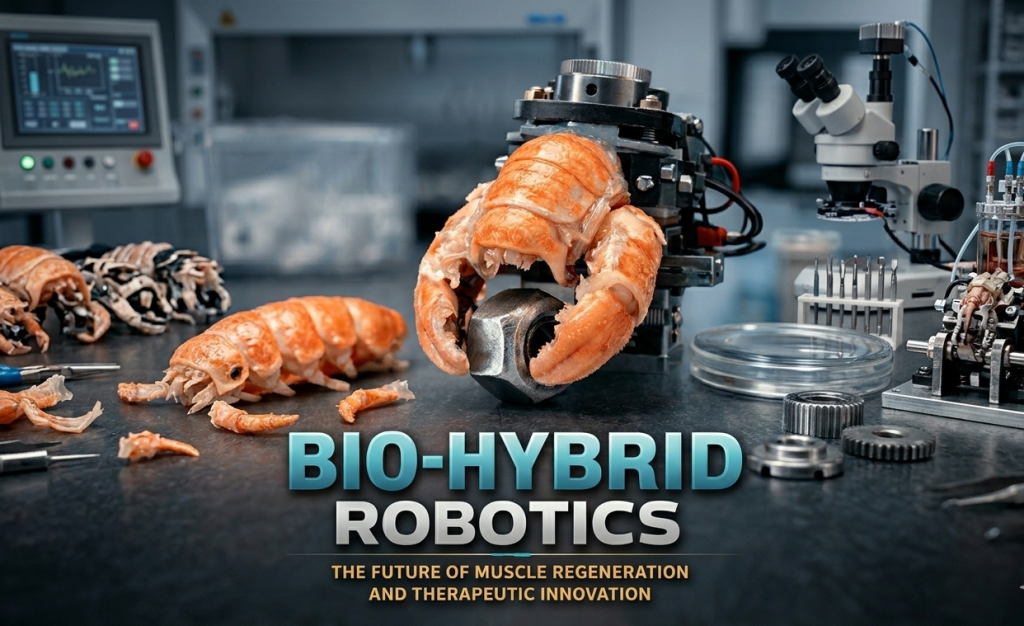
Healthcare is entering a new era where biology and engineering increasingly converge. One of the most exciting developments is biohybrid robotics in healthcare, an emerging field that integrates living biological materials with advanced robotic systems to create adaptive therapeutic solutions.
As healthcare systems seek more effective approaches to chronic disease management, tissue repair, and personalized treatments, healthcare innovation is accelerating the adoption of biohybrid technologies. Unlike conventional robots, these systems leverage the unique properties of living cells and tissues, enabling them to function harmoniously within the human body.
From enhancing muscle regeneration to enabling sophisticated targeted drug delivery, biohybrid systems have the potential to redefine the future of medicine. The future of biohybrid robotics in healthcare lies in its ability to deliver precise, patient-centric interventions that improve clinical outcomes.
What Is Biohybrid Robotics in Healthcare?
Biohybrid robotics in healthcare refers to robotic systems that combine biological components such as stem cells, muscle tissues, and biomaterials with engineered devices capable of performing therapeutic functions.
These systems can:
- Adapt to changing biological environments.
- Generate movement using living tissues.
- Interact naturally with human organs.
- Support regenerative healing processes.
- Deliver highly accurate therapeutic interventions.
Unlike traditional robotics in healthcare, biohybrid systems actively participate in biological functions, making them uniquely suited for next-generation treatments.
Why Healthcare Is Investing in Biohybrid Robotics
Several industry trends are driving investment in this field.
Growing Need for Regenerative Solutions
The increasing prevalence of musculoskeletal disorders, traumatic injuries, and age-related degeneration has amplified demand for advanced regenerative medicine approaches.
Limitations of Conventional Therapies
Traditional treatments often face challenges such as:
- Systemic side effects
- Limited tissue compatibility
- Delayed healing
- Prolonged recovery periods
Biohybrid approaches aim to overcome these limitations through personalized biological interventions.
Precision Medicine Evolution
Healthcare organizations are increasingly adopting precision-based strategies. The combination of AI in healthcare and biohybrid systems supports individualized treatment planning tailored to each patient’s biological profile.
Understanding the Muscle Regeneration Process
Muscle regeneration is the body’s natural mechanism for repairing damaged muscle fibers after injury or disease. Specialized stem cells known as satellite cells initiate this healing response.
Stages of Muscle Regeneration
1. Inflammatory Phase
Immune cells remove damaged tissues and initiate repair signaling pathways.
2. Satellite Cell Activation
Dormant satellite cells become activated following injury.
3. Proliferation and Differentiation
Activated cells multiply and differentiate into myoblasts.
4. Repair Phase
New muscle fibers form to restore damaged tissues.
5. Remodeling Phase
Muscle regains structural integrity and functionality.
Understanding these mechanisms provides insight into how biohybrid robotics improves muscle regeneration and accelerates recovery.
Types of Muscle Regeneration
Skeletal Muscle Regeneration
Skeletal muscles control movement and mobility. Biohybrid approaches may improve outcomes in sports injuries and muscular disorders.
Cardiac Muscle Regeneration
The heart has limited regenerative capacity, making cardiac repair particularly challenging. Researchers are exploring bioengineered cardiac patches as a promising therapeutic innovation.
Smooth Muscle Regeneration
Smooth muscles found in internal organs and blood vessels may benefit from advanced tissue engineering techniques integrated with robotic systems.
How Biohybrid Robots Enhance Muscle Repair
One of the most promising applications of biohybrid robots in medicine is supporting muscle healing and tissue restoration.
Targeted Drug Delivery
Biohybrid micro- and nanorobots enable targeted drug delivery using biohybrid robots, transporting therapeutics directly to damaged tissues.
Benefits include:
- Reduced systemic toxicity
- Improved drug concentration at the treatment site
- Enhanced therapeutic efficacy
Tissue Engineering Support
Advanced tissue engineering platforms provide structural environments that promote muscle growth and repair.
These systems may incorporate:
- Stem cells
- Growth factors
- Bioprinted scaffolds
- Biomimetic materials
Precision Therapeutics
Biohybrid technologies enable highly accurate precision therapeutics, allowing clinicians to intervene at microscopic levels while minimizing damage to surrounding tissues.
Applications of Robotics in Healthcare
Modern robotics in healthcare extends far beyond surgical assistance.
Surgical Robotics
Robotic systems support minimally invasive procedures with enhanced precision and improved patient outcomes.
Rehabilitation Robotics
Rehabilitation robotics helps patients recovering from stroke, spinal cord injuries, and orthopedic procedures regain strength and mobility.
Diagnostic Automation
The integration of AI in healthcare enables automated diagnostics, imaging analysis, and laboratory workflows that improve efficiency.
Assistive Care Robotics
Assistive robots support aging populations by promoting independence and improving quality of life.
These evolving applications of biohybrid robots in medicine represent the next frontier in patient-centered care.
Industry Insights: Emerging Trends in Therapeutic Innovation
Several technological shifts are shaping the future landscape.
AI-Driven Biohybrid Systems
The convergence of AI in healthcare with biohybrid robotics allows real-time adaptation and personalized therapeutic decision-making.
Stem Cell Integration
Patient-derived stem cells may reduce immune rejection while enhancing regenerative outcomes.
Soft Robotics Convergence
Flexible robotic materials improve safety and compatibility within biological environments.
Regulatory Evolution
As these technologies mature, regulatory agencies continue refining frameworks governing advanced biologics and combination products.
Experts believe the future of biohybrid robotics in healthcare will be defined by increasing collaboration among regenerative medicine specialists, engineers, and data scientists.
Future Therapeutic Innovations
The next decade is expected to deliver transformative breakthroughs through therapeutic innovations in regenerative medicine.
Potential advancements include:
- Personalized regenerative therapies
- Smart implantable devices
- Adaptive targeted drug delivery systems
- Organ-on-chip therapeutic platforms
- Autonomous microsurgical technologies
- AI-enhanced regenerative treatment planning
Organizations investing early in these technologies may gain significant advantages in delivering innovative patient care.
Conclusion
The emergence of biohybrid robotics in healthcare represents a major leap forward in medical science. By accelerating muscle regeneration, advancing targeted drug delivery, and enabling breakthrough therapeutic innovation, these technologies are reshaping the future of treatment.
As advances in regenerative medicine, AI in healthcare, precision therapeutics, and tissue engineering continue to converge, the healthcare industry is moving toward smarter, more personalized interventions.
The organizations that embrace these therapeutic innovations in regenerative medicine today will be best positioned to shape the next generation of patient care tomorrow.
Frequently Asked Questions
What is biohybrid robotics in healthcare?
Biohybrid robotics in healthcare combines biological materials with robotic technologies to support therapeutic, regenerative, and diagnostic applications.
How does biohybrid robotics improve muscle regeneration?
Understanding how biohybrid robotics improves muscle regeneration involves recognizing its ability to enhance tissue repair through targeted drug delivery, tissue engineering, and precision therapeutics.
What are the applications of biohybrid robots in medicine?
The major applications of biohybrid robots in medicine include regenerative therapies, cardiac repair, rehabilitation support, drug delivery, and implantable therapeutic systems.
Why is regenerative medicine important?
Regenerative medicine focuses on restoring damaged tissues and organs, offering long-term solutions beyond symptom management.
How is AI influencing healthcare robotics?
AI in healthcare improves robotic performance through predictive analytics, real-time adaptation, and personalized treatment optimization.
What role does rehabilitation robotics play in patient recovery?
Rehabilitation robotics supports recovery by enhancing mobility, improving therapy adherence, and accelerating functional restoration.
What challenges remain for biohybrid technologies?
Manufacturing complexity, regulatory pathways, scalability, and long-term safety validation remain key considerations.