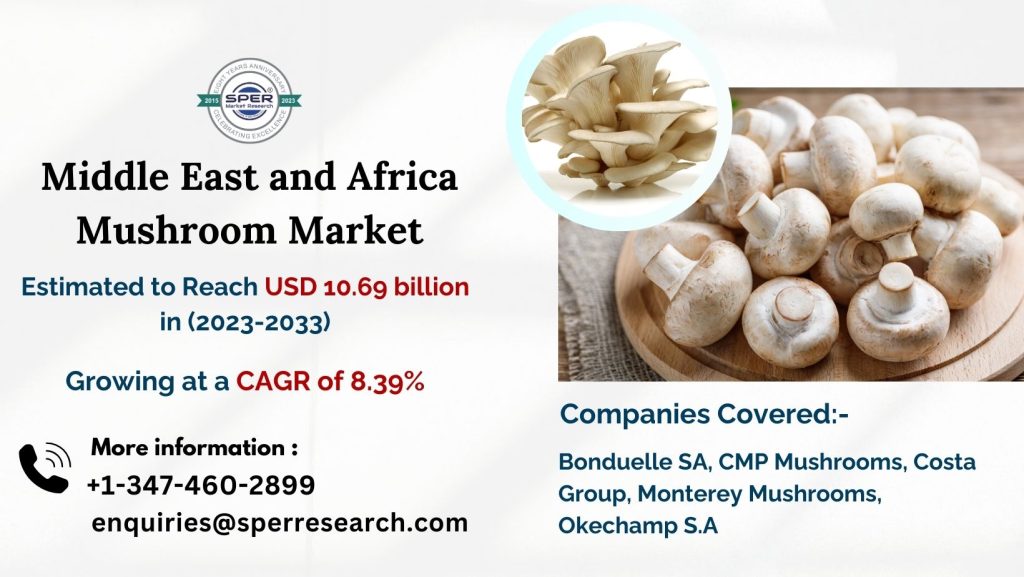
Middle East and Africa Mushroom Market

Middle East and Africa Mushroom Market Share, Revenue, Trends Analysis, Growth Drivers, Business Challenges and Forecast 2033: SPER Market Research

As a form of fungus, mushrooms are distinguished by their fleshy, spore-bearing fruiting bodies, which usually consist of a cap and a stalk. They are members of the kingdom Fungi and can be found growing in a variety of habitats, such as meadows, woodlands, and decomposing organic materials. Since mushrooms don’t have chlorophyll like plants do, they get their nourishment from the breakdown of organic matter or by developing symbiotic connections with plants. Because they include proteins, vitamins, minerals, and antioxidants, edible mushrooms—like the common mushroom, Agaricus bisporus—are consumed in large quantities. Furthermore, because of their bioactive chemicals, many mushroom species are utilised in medicine, but others can be dangerous or hallucinogenic and must be carefully identified before being consumed.

According to SPER Market Research, Middle East and Africa Mushroom Market Size- By Species, By Product Type, By Category, By Nature, By Cultivation Method, By Application- Regional Outlook, Competitive Strategies and Segment Forecast to 2033’ states that Middle East and Africa Mushroom Market is estimated to reach USD 10.69 billion by 2033 with a CAGR 8.39%.

Their disposable income frequently rises when the region’s population moves into cities. Spending on quick and healthful food options, like mushrooms, rises as a result. Additionally, consumers are become more mindful of the health advantages of mushrooms, which makes them a popular option for people who are concerned about their health. The need for a greater range of mushroom varieties is also being driven by the rising popularity of varied cuisines. Modern supermarkets and hypermarkets, as well as advancements in cold chain infrastructure, have made it easier to store and distribute fresh mushrooms, increasing their availability and reaching a wider audience. The industry is expanding as more people become aware of the possible health benefits of mushrooms.

Request For Free Sample Report @ https://www.sperresearch.com/report-store/middle-east-and-africa-mushroom-market.aspx?sample=1

However, the short shelf life of fresh mushrooms is a significant obstacle. This presents storage and transit logistical challenges. Wider distribution and market penetration are further limited in some areas by inadequate cold chain infrastructure. Also, cultural attitudes and a lack of consumer knowledge about mushrooms may be obstacles. Additionally, less expensive substitutes like conventional veggies and legumes compete with the market. Additionally, some customer segments may not be able to purchase it because to the comparatively high cost of cultivation when compared to some conventional crops. Lastly, the region’s lack of research and development on novel mushroom types and sophisticated farming methods can impede innovation and competitiveness in the worldwide market.

Due to labour constraints and shipping restrictions, the COVID-19 epidemic had a major impact on the mushroom market in the Middle East and Africa, upsetting supply networks and lowering production. Harvesting and processing operations were slowed down by the decreased personnel availability brought on by lockdowns and social distancing tactics. Furthermore, as these industries contribute significantly to consumption, the closure of eateries, lodging facilities, and foodservice establishments had a negative effect on mushroom demand. The pandemic did, however, also cause a change in consumer tastes towards foods that are healthier and increase immunity, which may eventually help the mushroom industry. The demand for mushrooms is anticipated to progressively increase as the economies of the region recover.

United Arab Emirates (UAE) dominated the Middle East and Africa Mushroom Market due to its well-established retail infrastructure. Some of the key players are – Bonduelle SA, CMP Mushrooms, Costa Group, Monterey Mushrooms, Okechamp S.A.

Our in-depth analysis of the Middle East and Africa Mushroom Market includes the following segments:

By Species:
  • Chaga
  • Cordyceps
  • Lion’s Mane
  • Maitake
  • Reishi
  • Shiitake
  • Tremella
  • Turkey Tail
  • Others
By Product Type:
  • Cultivated
  • Wild
By Category:
  • Regular
  • Full Spectrum
By Nature:
  • Conventional
  • Organic
By Cultivation Method:
  • Bed Cultivated
  • Log/Wood Cultivated
By Application:
  • Pharmaceutical
  • Food & Beverages
  • Dietary Supplements
  • Nutraceutical
  • Sports Nutrition
  • Personal Care
  • Others

For More Information, refer to below link:-

Middle East and Africa Mushroom Market Revenue

Related Reports:

United Kingdom Food Service Market Growth, Size, Trends Analysis- By Type, By Service Type, By Restaurant Type- Regional Outlook, Competitive Strategies and Segment Forecast to 2033

Mexico Dried Mushroom Market Growth, Size, Trends Analysis- By Type, By Source, By Distribution Channel- Regional Outlook, Competitive Strategies and Segment Forecast to 2033

Follow Us –  

LinkedIn | Instagram | Facebook | Twitter

Contact Us:  

Sara Lopes, Business Consultant – USA

SPER Market Research

enquiries@sperresearch.com

+1-347-460-2899

Middle East and Africa Mushroom Market

Middle East and Africa Mushroom Market Share, Scope, Revenue, Growth Drivers, Emerging Trends, Challenges, Future Opportunities and Competitive Analysis 2033: SPER Market Research

Mushrooms are intriguing animals that fill a distinct ecological niche. They belong to the fungus kingdom. They cannot photosynthesize since they lack chlorophyll, thus they must get their nutrients from the organic stuff surrounding them. Mushrooms can be found almost anywhere on the earth, from beautiful woods to congested cities. They are numerous and come in a wide variety of sizes, shapes, and colors. Some have medicinal or even hallucinogenic capabilities, while others are appreciated for their culinary qualities, which add rich flavors and textures to dishes. However, approach with caution, as numerous species are poisonous or even fatal if consumed.

According to SPER market research, Middle East and Africa Mushroom Market Size – By Species, By Product Type, By Category, By Nature, By Cultivation Method, By Application – Regional Outlook, Competitive Strategies and Segment Forecast to 2033’ state that the Middle East and Africa Mushroom Market is predicted to reach USD 10.69 billion by 2033 with a CAGR of 8.39%.

Drivers: The Middle East and Africa (MEA) mushroom market is growing as a result of several significant causes. The market is expanding as a result of consumers’ growing awareness of the health benefits of consuming mushrooms and their increased desire for nutritious, plant-based food options. Mushrooms are a popular alternative food among health-conscious consumers because of its high protein content, low calorie count, and variety of vitamins and minerals. The market is expanding because of the rising demand for mushrooms as a meat substitute due to the growing popularity of vegetarian and vegan diets.

Request For Free Sample Report @ https://www.sperresearch.com/report-store/middle-east-and-africa-mushroom-market.aspx?sample=1

Challenges: The general lack of knowledge and cultural acceptability of mushrooms as a mainstay food in many areas of the region is a major obstacle. Because traditional cuisines are absent from the Middle East and Africa (MEA), mushrooms are not as popular or consumed as they are in other areas of the world, despite their nutritional benefits and adaptability in the kitchen. The region’s climate, which is marked by high temperatures and dry conditions in many places, makes mushroom cultivation difficult as well. Efficient production necessitates regulated surroundings and appropriate equipment.

Impact of COVID-19 on Middle East and Africa Mushroom Market

The Middle East and African mushroom market has been significantly impacted by the COVID-19 pandemic, posing both opportunities and challenges for industry participants. Changes in supply and demand in the market were brought about by travel restrictions and supply chain interruptions. Fresh mushrooms were thought to have health benefits, which at first drove up consumer demand. However, the foodservice business saw a slowdown as a result of hotel, restaurant, and catering service closures, which had an impact on mushroom consumption. In addition, logistical difficulties and manpower shortages impeded production and delivery routes, briefly disrupting the mushroom supply.

Additionally, some of the market key players are; CMP Mushrooms, Costa Group, Monterey Mushrooms, Okechamp S.A, The Mushroom Company.

Middle East Mushroom Market Segmentation:

By Species: Based on the Species, Middle East and Africa Mushroom Market is segmented as; Chaga, Cordyceps, Lion’s Mane, Maitake, Reishi, Shiitake, Tremella, Turkey Tail, Others.

By Product Type: Based on the Product Type, Middle East and Africa Mushroom Market is segmented as; Cultivated, Wild.

By Category: Based on the Category, Middle East and Africa Mushroom Market is segmented as; Regular, Full Spectrum.

By Nature: Based on the Nature, Middle East and Africa Mushroom Market is segmented as; Conventional, Organic.

By Cultivation Method: Based on the Cultivation Method, Middle East and Africa Mushroom Market is segmented as; Bed Cultivated, Log/Wood Cultivated.

By Application: Based on the Application, Middle East and Africa Mushroom Market is segmented as; Pharmaceutical, Food & Beverages, Dietary Supplements, Nutraceutical, Sports Nutrition, Personal Care, Others.

By Region: This research also includes data for Kingdom of Saudi Arabia, United Arab Emirates, Egypt, State of Kuwait, Sultanate of Oman, Israel, Africa.

This study also encompasses various drivers and restraining factors of this market for the forecast period. Various growth opportunities are also discussed in the report.

For More Information, refer to below link:-

MEA Mushroom Market Future Outlook

Related Reports:

Middle East and Africa Bakery Products Market Size- By Product Type, By Distribution Channel- Regional Outlook, Competitive Strategies and Segment Forecast to 2033

Middle East and Africa Natural Food Colors Market Size- By Type, By Form, By Application- Regional Outlook, Competitive Strategies and Segment Forecast to 2033

Follow Us –  

LinkedIn | Instagram | Facebook | Twitter

Contact Us:  

Sara Lopes, Business Consultant – USA

SPER Market Research

enquiries@sperresearch.com

+1-347-460-2899