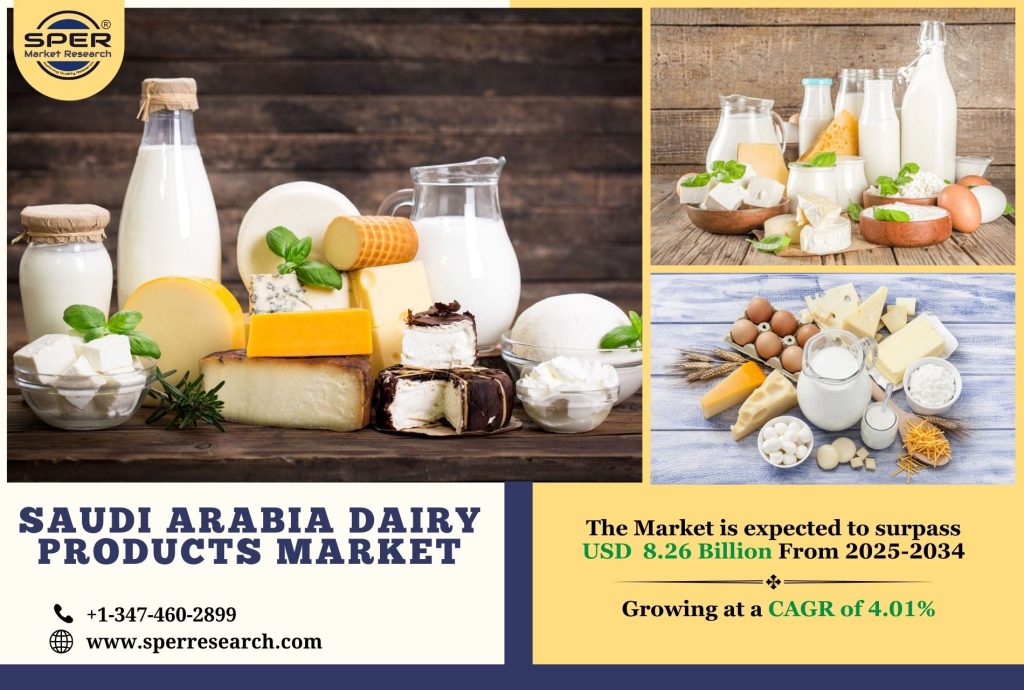
Saudi Arabia Dairy Products Market Growth, Scope, Analysis, Demand, Opportunities and Future Outlook Till 2034: SPER Market Research

Dairy products are made from milk and include a wealth of important elements including calcium, protein, and vitamins, they are an essential component of human nutrition. These goods, which satisfy a variety of dietary requirements and culinary applications, include milk, cheese, yogurt, butter, cream, and ghee. To guarantee safety and improve flavor, they are usually prepared from the milk of cows, buffaloes, goats, or sheep and go through procedures including pasteurization, fermentation, and homogenization. Because of advancements like low-fat, lactose-free, and fortified products as well as the growing need for quick, wholesome meal options, the worldwide dairy business is still expanding. Dairy products are essential to many cuisines, promoting global economic growth, culinary traditions, and health.

According to SPER Market Research, ‘Saudi Arabia Dairy Products Market Size- By Category, By Distribution Channel- Regional Outlook, Competitive Strategies and Segment Forecast to 2034’ states that the Saudi Arabia Dairy Products Market is estimated to reach USD 8.26 billion by 2033 with a CAGR of 4.01%. 

The market  leads the Middle East dairy market in terms of consumption because of things like the growing number of government-sponsored health and wellness initiatives aimed at preventing obesity and its associated conditions (diabetes, high blood pressure, heart disease, and high cholesterol), which encourage people to buy healthier products and in turn increase the nation’s dairy consumption. Consumers’ increasing disposable income, the speed at which cities are developing, and the growing demand for natural and organic dairy products are all contributing factors to the industry’s expansion. Furthermore, there is a trend toward a more Westernized diet as the population grows wealthier and more urbanized, which includes consuming more dairy products like cheese, yogurt, prebiotic beverages, and so on.

A significant barrier to the dairy business in Saudi Arabia is the country’s arid environment and scarce water supplies. Water is an essential resource for dairy cattle hydration as well as animal feed production. Even while technology and techniques have advanced significantly, it can still be difficult to maintain consistent quality and safety, which is essential for the Saudi dairy industry’s growth and export potential. There are many local and foreign companies fighting for consumers’ attention in the fiercely competitive Saudi dairy market. However, smaller local competitors and foreign gamblers pose a threat. Both market share and pricing are impacted by this fierce rivalry. One long-term issue facing the Saudi dairy industry is climate change.

Request a Free Sample Report: https://www.sperresearch.com/report-store/saudi-arabia-dairy-products-market.aspx?sample=1

Customers are experimenting with new brands in the low-stock situation, which is a significant change brought about by COVID-19. Online demand for dairy goods was strong during the first wave of business and community closures, and as more customers switched from physical stores, e-commerce pricing and out-of-stock levels rose. Saudi Arabia blocked its borders or increased trade barriers during the shutdown, which caused supply chains, especially dairy snacks, to be interrupted. Dairy products like milk, butter, and cream are in higher demand now because of the heightened interest in baking and cooking at home during the lockdown. The industry was forced by the epidemic to invest in supply chain resilience, improve online retail channels, and give priority to local production.

The capital and largest city of Saudi Arabia, Riyadh is the primary consumer hub for the country’s dairy products market. Its sizable, wealthy, and health-conscious populace fuels demand for a wide range of dairy products. Some of the key players are – Almarai Company, Al-Othman Holding Company, and Arla Foods AmbA.

For More Information, refer to below link: –  

Saudi Arabia Dairy Products Market Growth

Related Reports:  

Edible Flakes Market Growth, Size, Trends Analysis- By Product, By Distribution Channel – Regional Outlook, Competitive Strategies and Segment Forecast to 2034

Isomaltulose Market Growth, Size, Trends Analysis- By Grade, By End Use – Regional Outlook, Competitive Strategies and Segment Forecast to 2034

Follow Us – 

LinkedIn | Instagram | Facebook | Twitter 

Contact Us: 

Sara Lopes, Business Consultant — USA 

SPER Market Research 

enquiries@sperresearch.com 

+1–347–460–2899
Saudi Arabia Plant-Based Milk Market

KSA Dairy Products Market Trends 2023- Industry Share, Revenue, Growth Strategy, Business Challenges, Opportunities and Future Competition Till 2033: SPER Market Research

Milk-based products are those that are made primarily from the milk of animals such as sheep, goats, and cows. Milk, cheese, yoghurt, butter, and cream are dairy products that are frequently consumed. The main component of these goods is milk, which provides a valuable combination of minerals, vitamins, calcium, and protein. With so many health benefits, these products are essential to human nutrition. Their high content of calcium helps to strengthen bones and reduce the incidence of osteoporosis. In addition, dairy products contain proteins that aid in muscle growth and recovery. Vitamins improve immunological system performance and skin health, particularly vitamin D, which is found in dairy products.

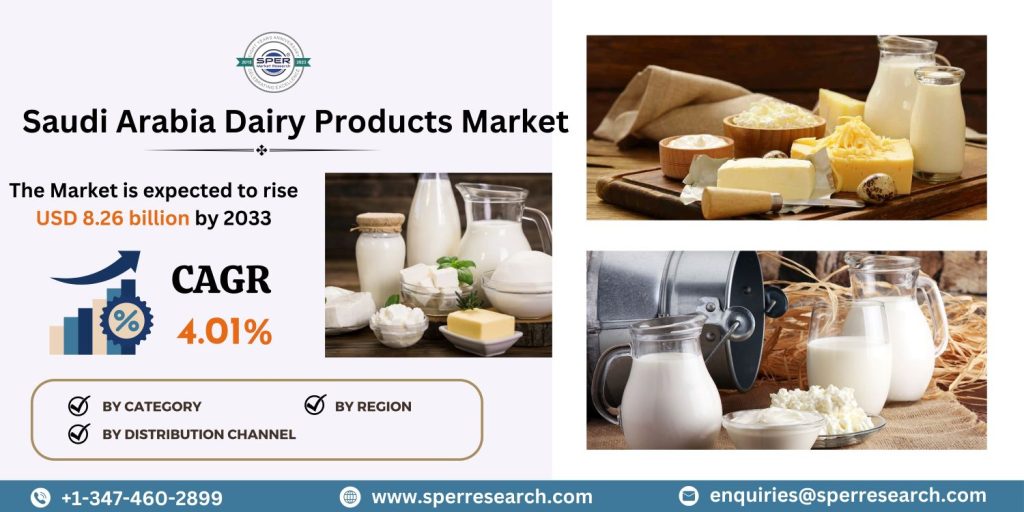
According to SPER market research, Saudi Arabia Dairy Products Market Size- By Category, By Distribution Channel- Regional Outlook, Competitive Strategies and Segment Forecast to 2033’state that the Saudi Arabia Plant-Based Milk Market is predicted to reach USD 8.26 billion by 2033 with a CAGR of 4.01%.

The dairy products market in Saudi Arabia is a dynamic sector, influenced by a mix of cultural traditions and contemporary trends. Historically, the country has embraced dairy consumption with staples like yogurt and fresh white cheeses. Recent market growth is propelled by increased demand and production innovations. Notably, there is a rising preference for organic and hormone-free dairy items as health consciousness grows. The global trends of veganism and lactose-free options are evident, with plant-based milk alternatives gaining popularity. Technological advancements in cold chain logistics contribute to efficient dairy transportation and storage, reducing wastage. Governmental support for economic diversification promotes investments in local dairy production, while international partnerships ensure a diverse product range, creating a vibrant future for the industry.

Nonetheless, the market for dairy products is being impacted by consumer tastes shifting towards plant-based substitutes due to increased awareness of animal cruelty. Plant-based alternatives, such as soy milk, almond milk, non-dairy ice cream, cheese substitutes, and whipped cream, are becoming more and more well-liked since they are seen to be safer and healthier. The emergence of novel plant-based equivalents, such as dairy-free ice cream, cheese alternatives, and whipped creams, is posing a challenge to the industry. Furthermore, the growing trend of vegan diets due to health concerns and lactose intolerance present obstacles to the expansion of the dairy sector. Significant capital expenditures for processing equipment and continuing maintenance have an additional effect on operating margins and may limit market expansion.

Request For Free Sample Report @ https://www.sperresearch.com/report-store/aerospace-parts-manufacturing-market.aspx?sample=1

Impact of COVID-19 on Saudi Arabia Dairy Products Market

Furthermore, when stocks are low, consumers are shifting to new brands as a result of the COVID-19 pandemic’s substantial effects on businesses and economies. E-commerce prices climbed as a result of higher out-of-stock levels during the first round of shutdowns, which resulted in a spike in online demand for dairy goods. The commerce was affected by Saudi Arabia’s lockdown, which caused significant disruptions in supply chains, especially in the dairy snack industry. Still, the lockdown increased interest in baking and cooking at home, increasing the market for dairy products like cream, butter, and milk. Moreover, there is a persistent national trend towards creative dairy products that can be consumed on-the-go and are prized for their quick and easy access to essential nutrients like protein and energy.

Saudi Arabia Dairy Products Market Key Players:

Additionally, some of the market key players are Almarai Company, Al-Othman Holding Company, Arla Foods AmbA, Danone SA, The National Agricultural Development Company (NADEC), Others.

Saudi Arabia Dairy Products Market Segmentation:

The SPER Market Research report seeks to give market dynamics, demand, and supply forecasts for the years up to 2033. This report contains statistics on product type segment growth estimates and forecasts.

By Category: Based on the Category, Saudi Arabia Dairy Products Market is segmented as; Butter (Cultured Butter, Uncultured Butter), Cheese (Natural Cheese, Processed Cheese), Cream (Double Cream, Single Cream, Whipping Cream, Others), Dairy Desserts (Cheesecakes, Frozen Desserts, Ice Cream, Mousses, Others), Milk (Condensed Milk, Flavored Milk, Fresh Milk, Powdered Milk, UHT Milk), Sour Milk Drinks, Yogurt (Flavored Yogurt, Unflavored Yogurt).

By Distribution Channel: Based on the Distribution Channel, Saudi Arabia Dairy Products Market is segmented as; Off-Trade (Convenience Stores, Online Retail, Specialist Retailers, Supermarkets and Hypermarkets, Others), On-Trade.

By Region: This research also includes data for Eastern Region, Northern and Central Region, Southern Region, Western Region.

This study also encompasses various drivers and restraining factors of this market for the forecast period. Various growth opportunities are also discussed in the report.

For More Information, refer to below link:-

Saudi Arabia Dairy Products Market Future Outlook

Related Reports:

North America Frozen Seafood Market Size- By Type, By Distribution Channel, By Sector- Regional Outlook, Competitive Strategies and Segment Forecast to 2033

Low-Calorie Food Market Size- By Product Type, By Distribution Channel, By Packaging Type, By Ingredients, By Brand Positioning- Regional Outlook, Competitive Strategies and Segment Forecast to 2033

Follow Us – 

LinkedIn | Instagram | Facebook | Twitter

Contact Us:

Sara Lopes, Business Consultant – U.S.A.

SPER Market Research

enquiries@sperresearch.com

+1-347-460-2899