Middle East and Africa Charcoal Market

Middle East and Africa Charcoal Market Growth, Size, Demand and Future Outlook 2033

Charcoal is a lightweight, black carbon residue generated by burning wood or other organic materials in the absence of oxygen, a process termed pyrolysis. It has been used for centuries as a fuel due to its high energy output, low moisture content, and cleaner burning compared to raw wood. Charcoal is commonly used for cooking, especially in outdoor grilling and traditional stoves, as well as in metallurgy and industrial applications. Activated charcoal, a processed form, is widely used in water filtration, air purification, and healthcare for its ability to absorb toxins. Its affordability, availability, and efficiency make it a valuable energy resource worldwide.

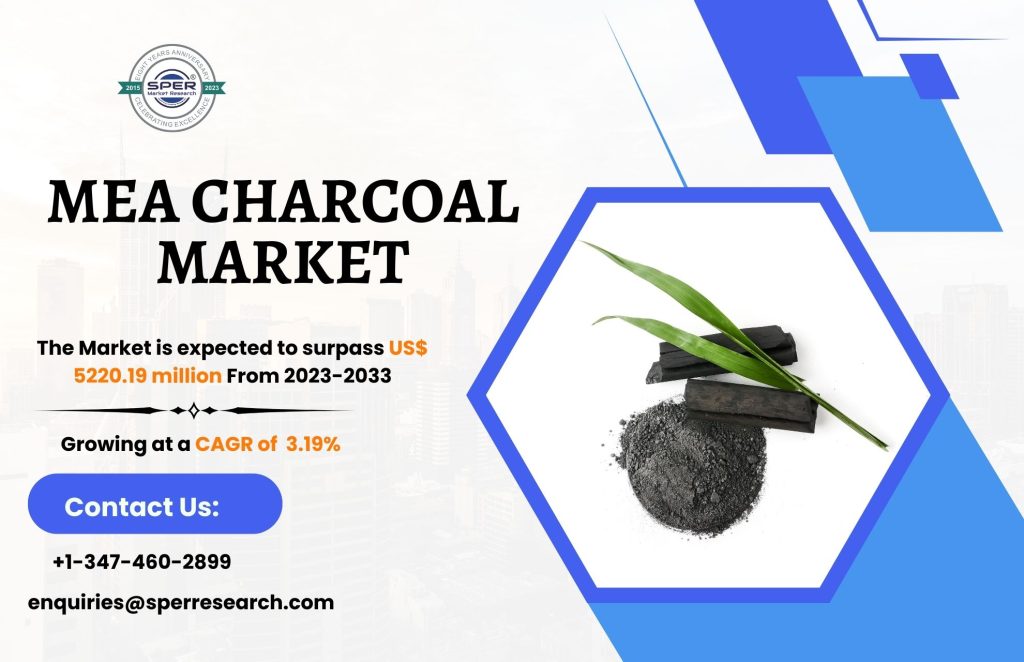
According to SPER Market Research, Middle East and Africa Charcoal Market Size- By Product, By Application- Regional Outlook, Competitive Strategies and Segment Forecast to 2033” states that Middle East and Africa Charcoal Market is estimated to reach 5220.19 USD million by 2033 with a CAGR of 3.19%.

Drivers:

The Charcoal market is driven by increasing demand for barbecue and outdoor cooking, especially in urban and developed regions where grilling culture is popular. In developing countries, charcoal remains a primary cooking fuel due to its affordability and availability. Growing use in industrial applications, such as metallurgy, cement production, and blacksmithing, also fuels market growth. The rising popularity of activated charcoal in cosmetics, pharmaceuticals, and water purification enhances its value across sectors. Furthermore, environmental shifts toward renewable biomass sources are encouraging the production of eco-friendly charcoal alternatives. Government and NGO support for sustainable charcoal practices is also boosting formal market development. Collectively, these factors contribute to consistent global demand across both domestic and commercial sectors.

Request a Free Sample Report: https://www.sperresearch.com/report-store/mea-charcoal-market.aspx?sample=1

Restraints:

The Charcoal market faces significant challenges, starting with environmental concerns related to deforestation and carbon emissions from traditional charcoal production. Unsustainable harvesting practices in some regions lead to forest degradation, prompting stricter government regulations. Health risks from indoor air pollution caused by charcoal use in poorly ventilated areas also limit adoption in some markets. Furthermore, a disjointed supply chain, uneven quality standards, and a lack of certification undermine customer confidence and impede international trade. Rising competition from cleaner and alternative fuels, such as LPG and electricity, further pressures market growth. Finally, limited access to modern carbonization technologies in developing nations hampers production efficiency and raises costs, restricting expansion in price-sensitive markets. Egypt held the biggest revenue share in the Middle East and Africa Charcoal Market. This is largely due to the country’s high demand for cheaper and more efficient wood fuel. While other countries in the region, like Saudi Arabia and the UAE, are also significant players in the charcoal market, Egypt’s consumption surpasses them. Some of the key market players are C Charcoal, Etosha, Jumbo Charcoal (Pty) Ltd., Mesjaya Sdn Bhd., Namchar and NamCo Charcoal and Timber Products

For More Information, refer to below link: –  

Middle East and Africa Charcoal Market Share

Related Reports:  

Octadecanedioic Acid Market Growth

Plastic Fencing Market Growth

Follow Us – 

LinkedIn | Instagram | Facebook | Twitter

Contact Us: 

Sara Lopes, Business Consultant — USA 

SPER Market Research 

enquiries@sperresearch.com 

+1–347–460–2899
Middle East and Africa Charcoal Market

Middle East and Africa Charcoal Market Trends, Share, Revenue, Growth Drivers, Business Challenges and Future Competition till 2033: SPER Market Research

Artificial black carbon residue from wood and other plant materials is used to make charcoal. This procedure is done in the presence of oxygen in order to remove materials that contain water or are volatile. The Middle East and Africa charcoal market is anticipated to expand due to the growing demand for the product in a variety of industries, including industrial filtration, building and construction, healthcare, pharmaceutical applications, and recreational cooking. Charcoal can be substituted for coal when cooking outside. In addition, the rising demand for charcoal is probably due to the growing popularity of barbecue in dining establishments.

According to SPER market research, Middle East and Africa Charcoal Market Size – By Product, By Application – Regional Outlook, Competitive Strategies and Segment Forecast to 2033’ state that the MEA Charcoal Market is predicted to reach USD 5220.19 million by 2033 with a CAGR of 3.19%.

Drivers:

Demand for better and more efficient stoves has changed. Conventional stoves, which are often used in homes for cooking and heating, are inefficient and a significant contributor to indoor air pollution. The health of individuals may be negatively impacted by these variables. In an effort to lower indoor pollution in residential homes and increase cooking and heating efficiency, several nations have introduced improved cook stoves. When properly prepared and utilized in energy-efficient appliances, charcoal can burn safely and cleanly as well. Convex shapes and complete insulation are features of modern cook stoves. They require less charcoal to produce an equivalent amount of useful heat because of their insulation, which allows them to retain heat for longer periods of time.

Challenges:

The Middle East and Africa’s charcoal market is shaped by a complex interplay of cultural, economic, and environmental factors that impact both the region’s production and consumption of charcoal. Charcoal has long been used for cooking and heating, and this has led to a consistent demand for the product from both urban and rural populations. Charcoal remains a vital energy source in many African countries, particularly in areas with restricted access to modern energy infrastructure. However, concerns about environmental sustainability and deforestation are drawing increased attention to the charcoal industry. Two examples of how sustainable charcoal production methods are being promoted are reforestation initiatives and the adoption of efficient kiln technologies.

Request For Free Sample Report @ https://www.sperresearch.com/report-store/mea-charcoal-market.aspx?sample=1

Impact of COVID-19 on Middle East and Africa Charcoal Market

The COVID-19 pandemic has had a major effect on the charcoal market because nearly every country has chosen to shut down all production facilities except for those that produce necessities. The COVID-19 pandemic has had some negative effects on the charcoal market. Because fewer sectors are involved in the charcoal market, its estimated year-over-year growth rate is lower than it was in 2019. But since it opened following COVID-19, the market has expanded swiftly, and it is anticipated that the industry will grow significantly due to the growing demand for barbecued food. Furthermore, it is anticipated that this component will propel the market’s overall growth.

MEA Charcoal Market key players

Additionally some of the market players are: C Charcoal, Etosha, Jumbo Charcoal (Pty) Ltd., Mesjaya Sdn Bhd., Namchar, NamCo Charcoal and Timber Products, The Clorox Company.

GCC Charcoal Market Segmentation:

The SPER Market Research report seeks to give market dynamics, demand, and supply forecast for the years up to 2033. This report contains statistics on product type segment growth estimates and forecasts.

By Product: Based on the Product, Middle East and Africa Charcoal Market is segmented as; Lump Charcoal, Charcoal Briquettes, Japanese Charcoal, Sugar Charcoal, Others.

By Application: Based on the Application, Middle East and Africa Charcoal Market is segmented as; Outdoor Activities, Restaurant Business, Metallurgical Fuel, Industrial Fuel, Filtration, Others.

By Region: This research also includes data for Saudi Arabia, UAE, South Africa, Egypt, Israel, Rest of Middle East and Africa.

This study also encompasses various drivers and restraining factors of this market for the forecast period. Various growth opportunities are also discussed in the report.

For More Information, refer to below link:-

Middle East and Africa Charcoal Market Growth

Related Reports:

France Paints and Coatings Market Size– By Resin, By Technology, By Recycling Process- Regional Outlook, Competitive Strategies and Segment Forecast to 2033

Black Mass Recycling Market Size- By Battery Source, By Technology, By Recovered Metal, By Application, By Battery Type- Regional Outlook, Competitive Strategies and Segment Forecast to 2033

Follow Us –  

LinkedIn | Instagram | Facebook Twitter 

Contact Us: 

Sara Lopes, Business Consultant – U.S.A. 

SPER Market Research 

enquiries@sperresearch.com

+1-347-460-2899